When To Retire Your Squash Shoes (Hint: Long Before They Look Worn Out)
Squash players love to hang onto their shoes. They look fine. The grip seems okay. The laces aren’t broken. So the pair stays in rotation far past its prime. The trouble is that performance dies long before appearance does. A squash shoe is really three different parts doing three different jobs: the outsole grips, the upper stabilizes the foot, and the midsole absorbs impact. The outsole and upper wear slowly and visibly. The midsole breaks down quietly . And once that midsole goes, the...
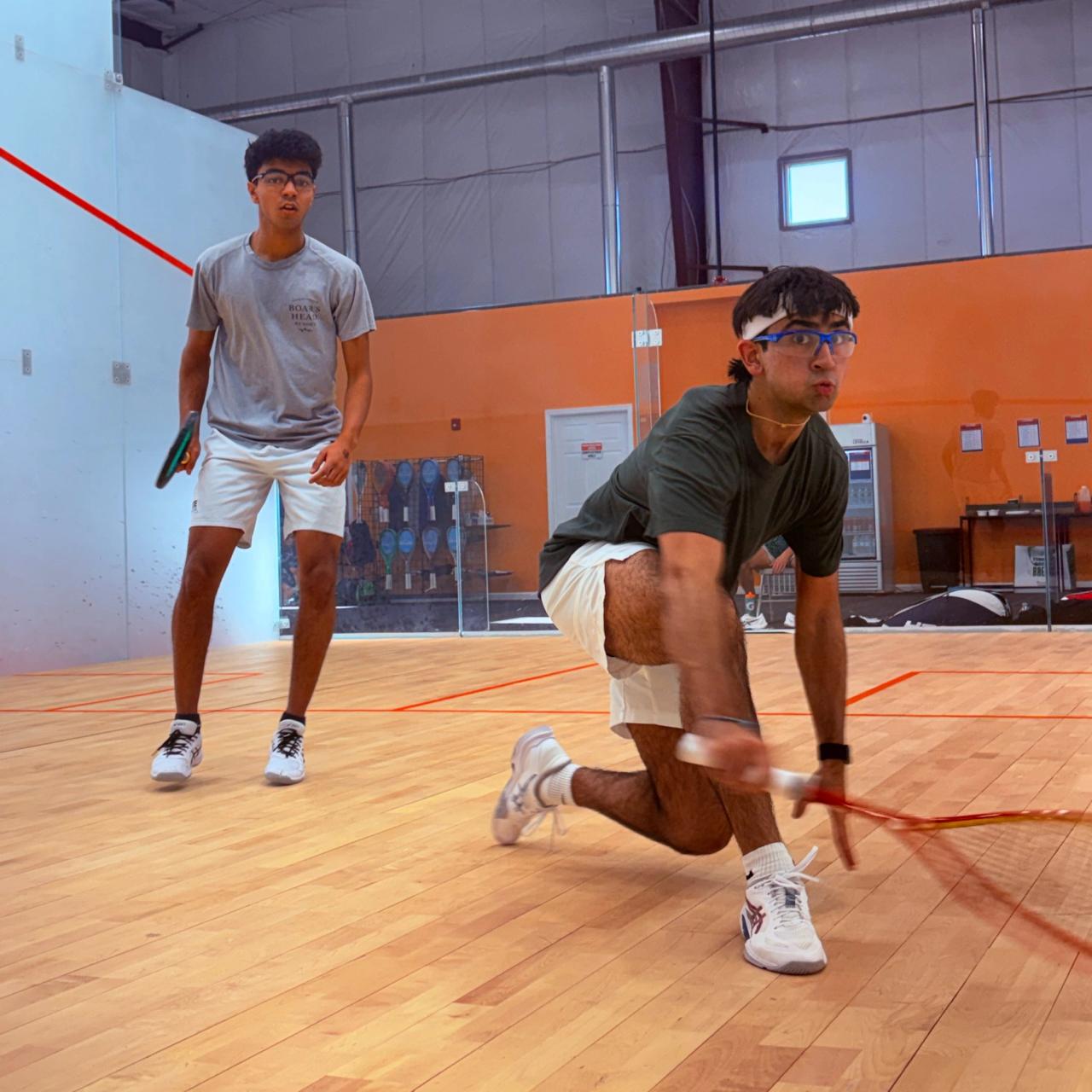
Squash players love to hang onto their shoes. They look fine. The grip seems okay. The laces aren’t broken. So the pair stays in rotation far past its prime. The trouble is that performance dies long before appearance does.
A squash shoe is really three different parts doing three different jobs: the outsole grips, the upper stabilizes the foot, and the midsole absorbs impact. The outsole and upper wear slowly and visibly.
The midsole breaks down quietly. And once that midsole goes, the shoe is no longer a shoe. It’s a soft, unstable, injury-friendly slipper.
Why Midsoles Matter More Than Looks
The midsole foam compresses every time you lunge, accelerate, and brake.
After a few hundred miles of court work, that foam stops rebounding. It doesn’t look damaged, but it feels different… usually in your knees, hips, shins, and lower back.
Signs your midsole is cooked:
- The shoe feels flat or “slappy” on the court.
- You’re getting sore in places that never used to bother you.
- The shoe bends more easily through the middle.
- Landings feel heavier or louder.
Most players should replace their shoes somewhere between 40 and 60 court hours, depending on intensity, body weight, and movement style. Elite juniors may need to retire them even sooner.
Mileage Matters More Than Appearance
A shoe can look brand new and be functionally dead.
A shoe can look beaten up and still be structurally sound.
That’s why checking appearance is far less useful than tracking:
- Court hours
- Feel under load
- How much rebound the shoe gives you when moving explosively
Think of it like restringing a racquet: you don’t wait for the strings to snap.
You replace them because performance fades.
Inspecting Your Shoes: A Quick Routine
There’s a simple three-point check players can do monthly:
- Press Test: Push your thumb into the midsole. If it feels firm with no bounce, it’s time.
- Flex Test: Try bending the shoe in the middle. If it folds like a pancake, support is gone.
- Asymmetric Wear: Look at the sides of the shoe. If the foot is tilting inward or outward, retire the pair before your ankles do.
The Transition Rules For New Shoes
Never take a fresh pair straight into a heavy practice.
Let them learn your feet gradually.
Here’s a simple break-in progression:
- Session 1: Wear them for warm-up and ghosting only.
- Session 2: Half the session in new shoes, half in old.
- Session 3: Flip the ratio.
- Session 4: Fully commit.
By week two, they should feel like extensions of your legs.
Always Have a Spare Pair
This rule is non-negotiable for serious juniors: never run out of shoes.
A spare pair matters because:
- Shoes die suddenly.
- New shoes need breaking in.
- Tournaments don’t pause for Amazon shipping.
- Training in a dead shoe builds injuries, not athletes.
Players who rotate two pairs usually double the lifespan of both.
The Hidden Killer: Wet Shoes
Wet shoes ruin everything.
Moisture weakens the glue, collapses the foam, and breeds bacteria worthy of a crime scene. They rip faster. They smell worse. They lose support.
Better strategy:
- Always alternate pairs. One dries while the other trains.
- Remove insoles overnight.
- Never leave shoes in a car. Heat cooks midsoles for breakfast.
Dry shoes are safe shoes. Wet shoes are a hostile ecosystem.
Final Takeaway
If you care about stability, speed, hygiene, and long-term joint health, treat your squash shoes like any other piece of performance equipment. They’re not built to last forever, and the signs of breakdown are almost always invisible.
Retire early. Rotate pairs. Break them in slowly. Your movement and your body will thank you.